
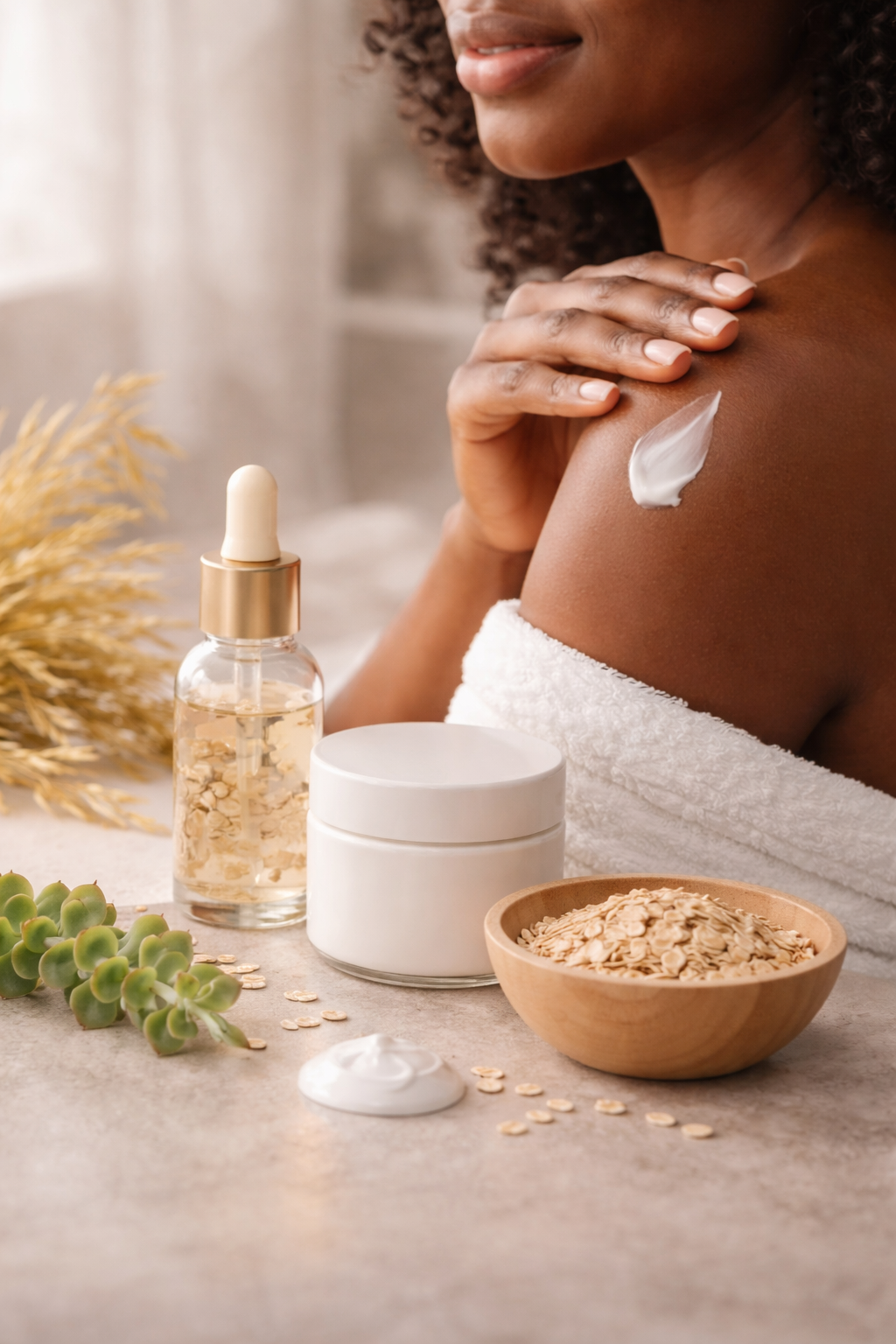
You’ve likely seen beta-glucan on an ingredient list without giving it much thought.
It hasn’t had the cultural moment that retinol has, or the buzz that peptides, PDRN, and exosomes are currently generating. Frankly, it doesn’t need it.
Beta-glucan is one of the most consistently well-researched ingredients in skincare, supporting barrier repair, hydration, and visible skin recovery in ways few ingredients can match. And yet, it’s still underutilized in body care.
Which is exactly why we’re talking about it.
What Is Beta-Glucan?
Beta-glucan is a naturally occurring polysaccharide—a long-chain carbohydrate—found in oats, yeast, mushrooms, and other plant sources.
It’s also the compound that makes oatmeal soothing for irritated skin (remember oatmeal baths?). In modern formulations, it’s used in more refined, concentrated forms that are designed to be more bioavailable.
What makes beta-glucan unique is its range. Beta-glucan supports several key functions at once, all tied to the same goal of helping skin recover.
How It Works
Beta-glucan interacts with receptors in the skin involved in repair and immune response. From there, it supports a coordinated set of processes that help restore balance after disruption. In practical terms:
1. Barrier Repair
When the skin barrier is compromised—for example by friction, sweat, frequent cleansing, or environmental exposure—beta-glucan helps support the rebuilding of that structure.
2. Moisture Retention
It acts as a humectant, drawing water into the skin. More importantly, it helps support the conditions that allow skin to hold onto that moisture over time.
3. Calming Visible Irritation
Beta-glucan helps regulate the skin’s inflammatory response, which can reduce visible redness and sensitivity.
4. Supporting Skin Structure
Through its interaction with deeper skin cells, beta-glucan supports the processes that maintain collagen and overall skin resilience.
5. Recovery After Stress
Research shows beta-glucan can support recovery after significant skin stress—including post-procedure environments.
That same mechanism applies to everyday stressors like workouts, friction, and frequent showering.
Why Source Matters
Not all beta-glucan behaves the same way.
Its effectiveness depends on where it comes from and how it’s processed.
- Oat-derived — the most studied for soothing and barrier repair
- Yeast-derived — strong in antioxidant and immune-support functions
- Mushroom-derived — rich in additional bioactive compounds
- Barley-derived — structurally similar to oat, with strong hydration benefits
For regular, high-frequency use—especially on body skin—oat and yeast-derived beta-glucan are among the most reliable.
Beta-Glucan and the Bodycare Opportunity
Most research on beta-glucan focuses on the face, but the need for it is often just as great on the body.
Body skin is exposed to:
- Repeated friction from clothing and movement
- Heat and sweat
- More frequent cleansing
- Less consistent use of high-quality formulations
The result is skin that’s not necessarily damaged, but consistently under-recovered.
Beta-glucan addresses this at a structural level. It supports how skin rebuilds itself, not just how it feels in the moment.
What to Look for on a Label
If you’re looking for beta-glucan in a product:
- INCI names: Beta-Glucan, Oat Beta-Glucan, Saccharomyces Cerevisiae Extract
- Placement: Ideally mid-to-upper ingredient list
- Formulation: Often paired with niacinamide, ceramides, or hydrating agents
As with most ingredients, how it’s formulated matters as much as the ingredient itself.
What Tends to Work Best
For skin that’s exposed to regular stress, consistency matters more than intensity.
Ingredients like:
- Beta-glucan
- Niacinamide
- Panthenol
- Lipids and ceramides
…support the skin in ways that are sustainable over time.
They may not be the most talked about—but they’re often the most effective.
Products Worth Considering
A few formulations approach barrier support and recovery particularly well, either through meaningful use of beta-glucan or through complementary ingredients that support the same function.
KraveBeauty Oat So Simple Water Cream
Why it fits:
- Oat-derived beta-glucan focus
- Minimal, highly intentional formula
- Designed specifically for barrier repair + sensitivity
Best for:
- Irritated, over-cleansed, or reactive skin
- Post-workout calming
iUNIK Beta-Glucan Power Moisture Serum
Why it fits:
- High concentration beta-glucan (core ingredient, not filler)
- Straightforward, functional formulation
- Very strong hydration + barrier support
Best for:
- Dehydrated skin
- Layering post-shower
Stratia Liquid Gold
Why it fits:
- Not beta-glucan-specific, but barrier repair power house
- Lipids + ceramides + cholesterol
Best for:
- Compromised skin barrier
- Long-term skin resilience
Biossance Squalane + Omega Repair Cream
Why it fits:
- Lipid-rich, barrier-replenishing
- Clean + biotech-aligned brand
- Strong for moisture retention + repair
Best for:
- Dry, stressed skin
- Daily body + face crossover use
A More Useful Way to Think About It
Not every effective ingredient is a trend. Some of the most valuable ones are the ones that quietly support how your skin functions day after day.
The Bottom Line
If your skin is regularly exposed to friction, sweat, and frequent cleansing, recovery matters.
Beta-glucan is one of those ingredients that supports that process from multiple angles—hydration, barrier function, and resilience.
Your bodycare doesn’t have to be complicated. It just needs to work.
Next in the Series
Explore the full Ingredient Education Series: EGF, Exosomes, and Peptides.